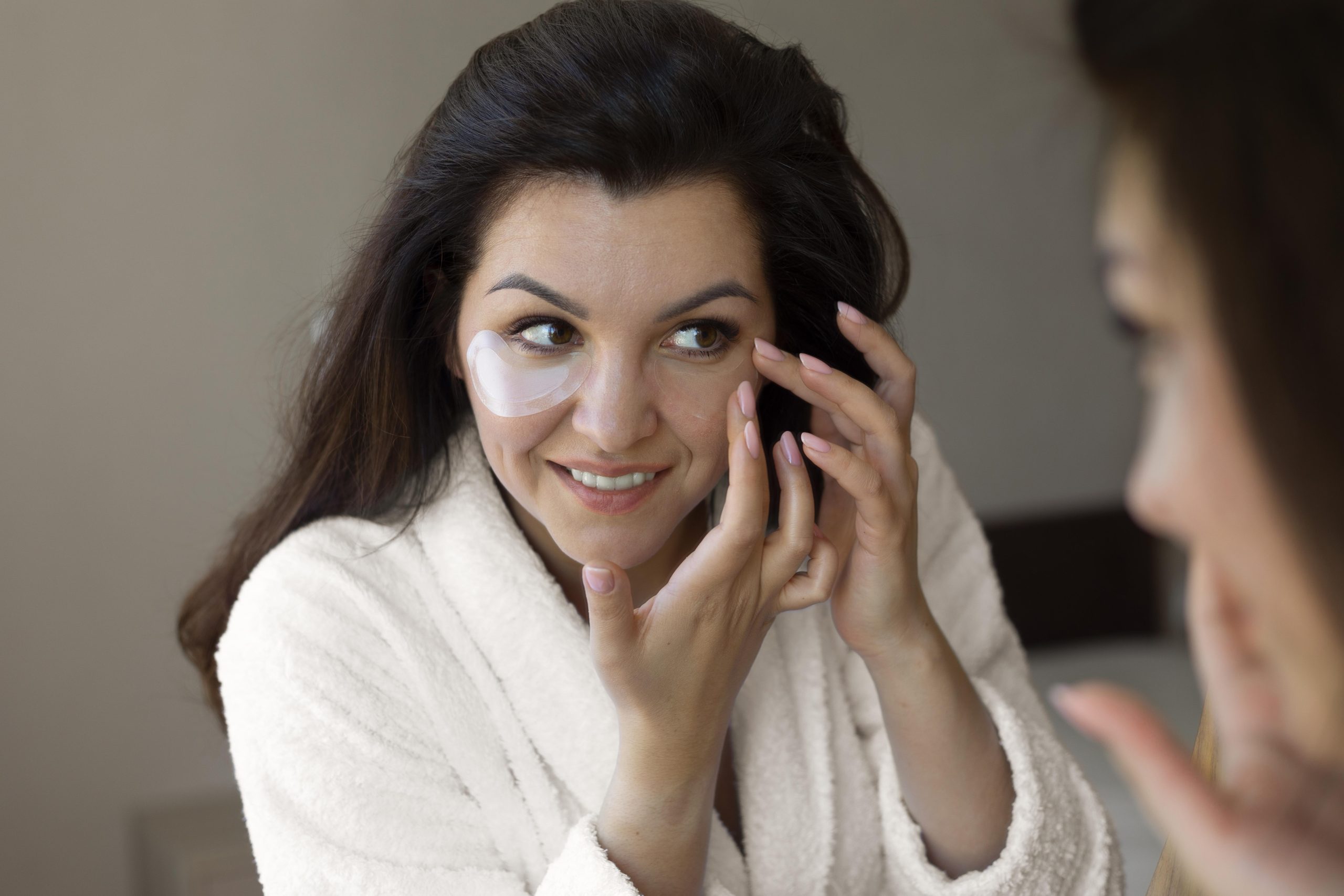
A comprehensive guide that covers clinically proven ingredients for aging skin recommended by dermatologists, including retinol, hyaluronic acid, vitamin C, peptides and niacinamide. Science behind anti-aging ingredients, how to use anti aging products, compatibility, guidelines and realistic expectations for results. Skin care solution for adults aged 25-55 with aging concerns (wrinkles, fine lines, and loss of collagen).
Understanding Aging Skin:
What causes aging?
Biological or Genetic Aging:
- Starts at mid 20s
- Human body annual collagen production reduces by 1% after age 20. [Ref: American Academy of Dermatology]
- Collagen fiber breakdown
- Cell turnover slows down from age 28.
- Genetics is responsible for 20%-30% visible signs of aging.
Environmental/ Lifestyle
- UV radiation (photoaging): It is responsible for 80% signs of facial aging. [Ref: Clinical, Cosmetic, and Investigational Dermatology 2013]
- Pollution and free radical damage can be reason for aging
- Smoking: Accelerates aging by reducing blood flow to skin.
- Poor nutrition and lack of hydration can be reason for skin aging
- Chronic Stress: This increases cortisol, and breaks down the collagen, and collagen fiber breakage is a cause of skin wrinkles.
- Inadequate Sleep: Lack of proper sleep can also be a reason for skin wrinkles, and uneven tones. This impairs the skin repair process.
At what age does aging begin?
Stages of skin aging:
| Collagen Dehydration Time | Skin Condition |
| Age 25 to 30 | The first line appears (expression lines around eyes). |
| Age 30 to 35 | Lack of collagen and firmness is noticeable. |
| Age 35 to 40 | Pigmentation appears and deep wrinkles starts to form, |
| Age 40-45 | Significant value loss, skin sagging and age spots starts from this age |
| Age 45-50+ | Hormonal changes (menopause), accelerates aging and increases dryness. |
Key Fact: Prevention is easier than reversal. Starting antiaging skin care at mid 20’s provides long term results.
The Science Behind Aging:
How collagen loss can cause skin aging:
Collagen provides structural support and elasticity to skin, it is the most abundant protein in skin, 70%-80% of protein comes from collagen.
- Formations of fine line and wrinkles
- Skin sagging and loss of facial volume
- Reduced skin thickness and fragility
- Slower wound healing
- Decreased skin hydration
- Broken collagen fibers causes weaker connective tissues
Can aging be reversed? Can wrinkles be minimized?
Skin treatments are available for reducing fine lines and wrinkles that have visible results. Deep wrinkles and severe photo damage can be minimized but cannot be reversed without aesthetic treatments.
Effect of topical treatments to remove wrinkles:
| Skin Aging Conditions | Improvement Level |
| Fine Lines | 30%-50% possible improvement |
| Surface Texture | Significant improvement |
| Early wrinkles | Moderate improvement |
| Preventive care for all aging issues | Highly improvement |
Understanding Aesthetic Treatments for Aging Skin
| Treatment | Improvement Level | Results |
| Botox/Neuromodulators | Relaxes muscles causing dynamic wrinkles. | Appears 3-7 days and lasts 3-6 months. |
| Dermal Fillers | Improves lost volume of cheeks, lips and under eye area. Most fillers are made of hyaluronic acid that naturally plumps skin. | Results are immediate and last for 6-18 months. |
| Laser Resurfacing | Advanced laser technology that removes damaged outer skin layers and heats deeper layers to stimulate collagen. | Hybrid lasers have shown dramatic results starting from the year 2025 which takes less downtime than previous models. |
| Microneedling with PRP/PRF | This facial gained popularity with the name of “Vampire Facial”. This treatment uses tiny needles to micro injuries which is followed by the patient’s own platelet rich plasma injections for fast healing and collagen production. | The process rejuvenates facial skin without surgery. Causes fast collagen production, builds new cells, increases elasticity of skin, reduces fine lines and wrinkles, improves texture and skin looks plumpier. |
| Non-surgical Skin Tightening | Ultrasound and radiotherapy is used to heat deep tissue layers. | This treatment lifts and tightens skin, removes sagging skin on jawline, neck and eyebrow without surgical treatment. |
| Regenerative Exosome Therapy | Exosomes derived from stem cells are applied to repair skin at a cellular level. | This treatment improves structure of the skin and reduces inflammation. |
These treatments are costly and are a continuous process. During aesthetic treatment dermatologists recommend skin care routines that must be strictly followed by the patients.
Ingredients that improve skin without aesthetic treatments, these have scientifically proven improvements if the rules of healthy lifestyle are followed.
Top clinically proven anti-aging ingredients
| Ingredient | Clinical Evidence | Efficiency Rating | How it works | Clinical Results |
| Retinol (Vitamin A Derivative) | Gold standard anti aging ingredient with 50+ years of research. | 5 out of 5 | Increases cell turnover rate.
Stimulates Collagen Production Reduces melanin production Normalizes keratinization. |
12 week studies resulted in 20%-30% reduced fine lines. [Ref: International Journal of Cosmetic Science, 2019]
Improves thickness of skin, by 8%-10% Increases collagen density. |
| Hyaluronic Acid (HA) | Proven hydration molecule, holds 1000x in water | 5 out of 5 | Binds water into skin surface
Plumps fine lines through hydration Supports skin barrier functions. Signals collagen synthesis |
Increases hydration by 96% after continuous usage of 8 weeks. [Ref: Journal of Clinical, Aesthetic Dermatology, 2014]
Reduces wrinkles by 10%–20% through hydration. |
| Vitamin C (L – Ascorbic Acid) | Powerful antioxidant with photo protective properties | 5 out of 5 | Neutralizes free radicals from UV and pollution.
Essential cofactor for collagen synthesis. REduces pigmentation Boosts SPF effectiveness |
Usage of 12 weeks delivers scientifically proven results by visible skin radiance. [Ref: Dermatologic Surgery, 2001]
Reduces UV induces photo damage marks by 52% |
| Niacinamide (Vitamin B3) | Multi-functional ingredient with excellent tolerant efficiency | 4 out of 5 | Increases ceramide and fatty acid production. (Strengthens skin barriers)
Reduces inflammation and redness. Brightens skin by melanosome transfer. Regulates sebum production. Stimulates collagen production. |
5% niacinamide reduces fine lines by 20% in 12 weeks. [International Journal of Cosmetic Science, 2004]
Improves skin elasticity by 10%-15% Reduces hyperpigmentation by 35%-68%. |
| Peptides | Signaling molecules that stimulate collagen production. There are types of peptides with significant properties. | 4 out of 5 | Types Palmitoyl Pentapeptide -4 (Matrixyl), – Stimulates collagen I, III, IV.
Copper Peptides (GHK-Cu)- Wound healing, Collagen Synthesis. Argireline (Acetyl Hexapeptide-8) – Topical Botox- Relaxes expression lines. Signal Peptides-Communicate with cells to produce collagen. |
Matrixly reduces wrinkles by 23% [Ref: International Journal of Cosmetic Science, 2005]
Copper Peptides increase collagen synthesis by 70% |
| Ceramides | Essential lipids that forms skin barrier | 5 out of 5 | Forms protective barrier against moisture loss.
Prevents environmental irritation. Decreases age naturally by 60% Key ceramides: Ceramide 1 (EOS): Barrier Integrity |
Improves skin barrier by 57% [Journal of Drugs in Dermatology, 2017]
Prevents skin water loss by 20% |
| SPF (Broad Spectrum Sun Protection) | Single most effective anti aging preventive measure | 5 out of 5 | Prevents UV indeed collagen breakdown.
Protects against DNA damage. Prevents photoaging and hyperpigmentation. |
Daily SPF used for 1 year reduces 52% less aging. [Ref: Annals of Internal Medicine, 2013]
Prevents 80% of visible signs of aging. |
| Alpha Hydroxy Acid (AHA) – Glycolic Acid | Exfoliating acid that resurface skin | 4 out of 5 | Breaks bonds between dead skin cells.
Increases cell turn over. Stimulates collagen production Improves product penetration |
10% Glycolic acid reduces fine lines by 27% in 6 months. [Ref: Dermatologic Surgery, 2001]
Increases epidermal thickness by 11% |
| Bakuchiol (Natural Retinol) | Plant derived retinol with gentle profile | 4 out of 5 | Stimulates collagen production (similar to retinol)
Gene expression changes comparable to retinol Antioxidant and anti inflammatory properties. No photo sensitivity. |
12 week usage shows better comparable results 0.5% retinol. [Ref: British Journal of Dermatology, 2019]
Reduces fine lines and hyperpigmentation with less irritation. |
| Green Tea | Polyphenol Anti Oxidant with anti aging properties | 3 out of 5 | Neutralizes free radicals
Anti inflammatory Protects against UV damage Inhibits Collagenase (enzymes breaks down to collagen) |
Reduces UV induced erythema by 25%. [Ref: Archives of Dermatology 2001]
Improves skin elasticity by 10 weeks over 8 weeks. |
| Antioxidants (Vitamin E, Resveratrol, Coenzyme 10) | Protective molecules that neutralize oxidative stress. | 4 out of 5 | Neutralizes free radicals from UV, pollution and stress.
Prevent collagen breakdown Support skin repair process |
Vitamin E (Tocopherol)
Resveratrol: Anti inflammatory mimics caloric restriction benefits. Support skin repair process. CoQ10: Energies cells, by 40 body’s natural level of NAD+ declined by 50%-75% |
| Ferulic Acid | Antioxidants that stabilize and boost vitamin C. | 4 out of 5 | Neutralizes free radicals
Doubles photoprotection, when combined with vitamin C and E. |
Stabilizes vitamin c formulations. |
| Ingredient | Skin Type | Concentration Range | Usage |
| Retinol (Vitamin A Derivative) | All Skin Types (needs concentration) | 0.25%-1% (OTC)
0.5%-2% (prescribed) |
Evening Only (Photo sensitive). |
| Hyaluronic Acid (HA) | All Skin Types, especially dry and dehydrated skin
Molecular Weights According To Skin Conditions: Low MW (5-50kDA) Penetrates deeper hydration. Medium MW (50-1000 kDA) Balanced hydration. High MW (1000+ kDA) surface Hydration, film forming. |
0.5-2% | Morning and Evening. |
| Vitamin C (L – Ascorbic Acid) | All types of skin are not allergen or sensitive. Good for sun damaged skin. | L-Ascorbic is unstable, best concentrations can be 10%-20% in pH 2.5-3.5 formulas. 5%-10% derivatives. | Morning Anti oxidant protection. |
| Niacinamide (Vitamin B3) | All skin types, excellent for sensitive, rosacea-prone skin. | 2%-10% | Morning or evening. |
| Peptides | All skin types, especially for matured and aged skin. | 3%-5% Peptide complex. | Morning to evening. |
| Ceramides | There are types of ceramides. Critical for dry, mature and sensitive skin. | 2%-5% | Morning and Evening |
| SPF | Minimum requirement SPF 30+ (Blocks 97% of UVB) Board Spectrum (UVA+UVB) Water Resistant (40 to 80 minutes) All skin types, daily mornings, even on rainy or cold weather |
SPF 30+ (Blocks 97% of UVB) | Every 2 hours |
| Alpha Hydroxy Acid (AHA) – Glycolic Acid | Most skin types. Avoid applying on very sensitive skin. | 5%-10% Daily 20-30% Professional (Recommended by Dermatologist) |
Evenings only (Photosentizing) |
| Bakuchiol (Natural Retinol) | Sensitive and retinol intolerant. Pregnant and breast-feeding must consult a doctor. | 0.5%-2% | Morning and evening |
| Green Tea | All skin types, especially sensitive and inflamed skin. | 1%-5% | Morning and/or evening |
| Antioxidants (Vitamin E, Resveratrol, Coenzyme 10) | All skin types, critical for urban environments. | No fixed percentage. | Morning and/or evening |
| Ferulic Acid | All types of aged skin. Vitamin C+ Vitamin E + Ferulic Acid increases 8x photo protection. [Ref: Journal of Investigative Dermatology, 2005] | 0.5% to 1% | Morning (Anti oxidant protection) |
Pro Tips for using the ingredients
| Ingredient | Pro Tips Using |
| Retinol (Vitamin A Derivative) | Start with 0.25% retinol 2x weekly, gradually increase to nightly over 8-12 weeks if build tolerance. |
| Hyaluronic Acid (HA) | Compatible with all ingredients. |
| Vitamin C (L – Ascorbic Acid) | Avoid Mixing with Niacinamide in the same application. |
| Niacinamide (Vitamin B3) | Compatible with all ingredients. Caution with pure Vitamin C |
| Peptides | Compatible with most ingredients. |
| Ceramides | Compatible with all ingredients. |
| SPF | Compatible with all products, the last stage of morning to evening skin care. |
| Alpha Hydroxy Acid (AHA) – Glycolic Acid | Do not combine with Retinol or Vitamin C in the same routine. |
| Bakuchiol (Natural Retinol) | Can be used with AHA and Vitamin C. |
| Green Tea | Compatible with all ingredients. |
| Antioxidants (Vitamin E, Resveratrol, Coenzyme 10) | Compatible with all ingredients. |
| Ferulic Acid | Best with vitamin C and E. |
Quick Reference Anti Aging Ingredient Comparison Table
| Ingredient | Primary Benefit | Efficiency | Best For | Concentration | When to use |
| Retinol | Collagen boost, cell turnover | ⭐⭐⭐⭐⭐ | Fine lines, texture | 0.25-1% | PM only |
| Hyaluronic Acid | Hydration, plumping | ⭐⭐⭐⭐⭐ | All skin types | 0.5-2% | AM/PM |
| Vitamin C | Antioxidant, brightening | ⭐⭐⭐⭐⭐ | Sun damage, dullness | 10-20% | AM |
| Niacinamide | Multi-functional, barrier | ⭐⭐⭐⭐ | Sensitive, redness | 2-10% | AM/PM |
| Peptides | Collagen synthesis | ⭐⭐⭐⭐ | Mature skin | 3-5% | AM/PM |
| Ceramides | Barrier repair | ⭐⭐⭐⭐⭐ | Dry, sensitive | 2-5% | AM/PM |
| SPF | Prevention | ⭐⭐⭐⭐⭐ | Everyone | SPF 30+ | AM |
| Glycolic Acid | Exfoliation, texture | ⭐⭐⭐⭐ | Rough texture | 5-10% | PM only |
| Bakuchiol | Gentle retinol alternative | ⭐⭐⭐⭐ | Sensitive skin | 0.5-2% | AM/PM |
| Ferulic Acid | Antioxidant booster | ⭐⭐⭐⭐ | Sun protection | 0.5-1% | AM |
Morning Vs Evening Skin Care Routine
Morning Routine: Protection Focus
Step 1: Gentle Cleanser
- It is recommended to use mild and pH balanced cleanser
- Avoid striping natural oils
Step 2: Antioxidant Serum
- Vitamin C 10%-20% + Ferulic Acid 0.5%
-
- OR Niacinamide 5%-10%
- DO NOT USE BOTH OF THE PRODUCTS TOGETHER.
- Wait 60 seconds for absorption.
Step 3: Hyaluronic Acid Serum
- Apply hyaluronic acid serum on damped skin for maximum hydration
- Layer products for best results
Step 4: Eye Cream
- Peptide or Caffeine based eye cream
- Gently pat around orbital bone
Step 5: Moisturizer
- Ceramide-rich formula
- Lightweight for oily skin and richer for dry skin
Step 6: SPF 30-60
- Broad spectrum water resistant
-
- Reapply within 2 hours due to sun exposure
- Minimum amount ¼ teaspoon for face.
Evening Routine (Repair Focus)
Step 1: Oil Cleanser or Micellar Water
- Remove SPF and makeup completely
- Avoid stripping natural oils
Step 2: Water Based Cleanser
- Double cleanse face
Step 3: Exfoliation (2x-3x Weekly)
- Glycolic Acid 5%-10%
- OR Retinol 0.25%-1%
- DO NOT BOTH OF THE PRODUCTS TOGETHER
- DO NOT USE RETINOIDS ON DAILY
Step 4: Treatment Serum
- Peptide or Bakuchiol
- OR Niacinamide (PM)
Step 5: Retinol
- Start 2x weekly, build to nightly
- Use pea size amount of product
- Avoid eye area
Step 6: Hyaluronic Acid
- Rehydrate after retinol wait time
Step 6: Moisturizer
- Ceramide + Peptide
- Thicker texture for night repair
Step 6: Apply Face Oil (Optional)
- Jojoba or Squalane
Anti aging Ingredient Compatibility: Safe to Combine Ingredients
| Ingredient 1 | Ingredient 2 | Benefits |
| Vitamin C | Vitamin E + Ferulic | Enhanced antioxidant protection |
| Niacinamide | Peptides | Complementary collagen boost |
| Hyaluronic Acid | Everything | Universal hydration |
| Ceramides | Everything | Barrier support |
| Retinol | Hyaluronic Acid | Reduces irritation |
| Bakuchiol | Vitamin C | No interaction issues |
| SPF | Antioxidants | Boosted photoprotection |
Use with Caution
| Ingredient 1 | Ingredient 2 | Issue |
| Retinol | Vitamin C | Potential irritation (use different times) |
| Retinol | AHAs/BHAs | Over-exfoliation risk (alternate nights) |
| Vitamin C | Niacinamide | pH incompatibility (debated, separate by time) |
| AHAs | BHAs | Excessive exfoliation |
Do not Combine the following ingredients:
| Ingredient 1 | Ingredient 2 | Issue |
| Retinol | Benzoyl Peroxide | Inactivates retinol |
| Vitamin C (L-AA) | Copper Peptides | Destabilizes vitamin C |
| Retinol | Direct acids (same time) | Severe irritation |
Common mistakes to avoid for aging skin
Caution about using the products:
- Using Multiple Actives: Do not use multiple actives at once. Combining retinol + vitamin C + AHA routine can cause skin barrier damage. Introduce one active at a time and make your skin get used to it.
-
- Using SPF: Anti-aging treatments are effortless without UV protection. Apply SPF every morning, even indoors (as UVA penetrates windows.) Reapply sun protection every two hours indoors.
- Impatience with Results: Do not expect visible results within a week. Keep your patience, while using the recommended products as prescribed or
- Layering Products: Choose products carefully, while layering on face. Using oils before serums blocks penetration. Apply thinnest to thickest products: Toner→ Serum→Moisturizer→Oil→SPF (AM)
- Patch test: Patch test products, before buying. Keep the products applied on the jawline for 48 hours.
- Avoid Daily Exfoliation: Daily exfoliation damages skin barriers and causes chronic irritation. Use ceramides and niacinamide to maintain a healthy skin barrier.
Expected Realistic Results with Timeline:
Week 1-3: Adjustment Period
- Skin may feel slightly dry and tight
- Possible purging with Retinol (normal and temporary)
- Radiance and glow increase
Week 4-7: Early Improvement Period
- Skin texture will become smoother
- Minor reduction in fine lines (due to hydration)
- Visible radiance and glow on skin
Week 8-12: Visible Changes Period
- Fine lines reduce by 15%-25%
- Reduced uneven skin tone
- Improvement of skin texture
- Improvement in skin firmness
Week 6-12: Visible Results
- Deep wrinkles soften 20%-30%
- Collagen production increases
- Hyperpigmentation fade by 40%-60%
- Skin thickness improves
Week 6-12: Visible Results
- Deep wrinkles soften 20%-30%
- Collagen production increases
- Hyperpigmentation fade by 40%-60%
- Skin thickness improves
Maintenance
- Continue regimen to maintain results
- Adjust products as skin condition changes
- Professional treatment for deeper concerns
Important Note: Results vary based on genetics, lifestyle, consistency, and baseline of condition.
FAQ: Anti aging ingredients
Q1: At what age should I start using anti-aging products?
Answer: Start anti aging care with SPF, antioxidants and hydration, in the mid 20’s as collagen production starts declining by 1% per year. Introduce retinol and other more active ingredients for age late 20’s to early 30’s.
Ages for Interventions:
Age 25: SPF + antioxidants (vitamin C) + hyaluronic acid
Age 30: Retinol 0.25-0.5% + peptides + niacinamide
Age 35+: Increase retinol strength + add growth factors
Age 40+: Consult dermatologist and use recommended products as well as home care, controlled diet and healthy lifestyle.
Q2: Can I use vitamin C and retinol together?
Answer 2: Yes, if skin doesn’t react to these ingredients they can be used together, though in different timelines. Use strategically, use vitamin C for morning skin care routine and retinol for night care.
Practice: Vitamin C + SPF (AM), Retinol + hydrating moisturizer (PM)
Q3: How long until I see the results using retinol or vegan retinol products?
Answer 3: Timelines vary upon ingredients.
Quick Results: (2-4 weeks)
- Hyaluronic acid: Quick plumping
- Niacinamide: 2-4 weeks for radiant skin
- Vitamin C: 4 weeks for skin brightness
Moderate Results: (8-12 weeks)
- Retinol: 8-12 weeks for reducing fine lines
- Peptides: 8-12 weeks for skin firmness
- AHAs: 6-8 weeks texture
Long Term Results: (3-6 plus weeks)
- Deep Wrinkles: (6-12 months)
- Significant pigmentation: 3-6 months
- Collagen Rebuilding: 6+ months
Consistency is crucial. Daily usage of 12 weeks is required for most actives.
Q3: Can anti aging ingredients cause purging?
Answer: Yes, anti-aging ingredients cause purging. Only a few ingredients cause purging due to skin turnover.
Q4: Which anti-aging ingredients cause purging?
Answer: Anti aging ingredients that cause skin purging are:
- Retinol/Retinoids
- AHA (Glycolic Acid, Lactic Acid)
- BHA (Salicylic Acid)
- Bakuchiol Oil (Rare, but impossible)
Purging Vs Breaking out
| Purging | Breakout |
| Appears in the areas of breakout, clears between 4-6 weeks. Brings underlying congestion of the surface faster. | New breakouts in unusual areas, continue 6 weeks, indicating sensitivity. |
References:
- American Academy of Dermatology: https://www.aad.org (retinol research, sun protection guidelines)
- Journal of Clinical and Aesthetic Dermatology: (hyaluronic acid studies)
- International Journal of Cosmetic Science: (peptide and niacinamide research)
- Dermatologic Surgery Journal: (vitamin C and glycolic acid clinical trials)
- British Journal of Dermatology: (bakuchiol vs retinol study)
- Journal of Investigative Dermatology: (ferulic acid photoprotection)
- Annals of Internal Medicine: (SPF daily use prevents aging study)


