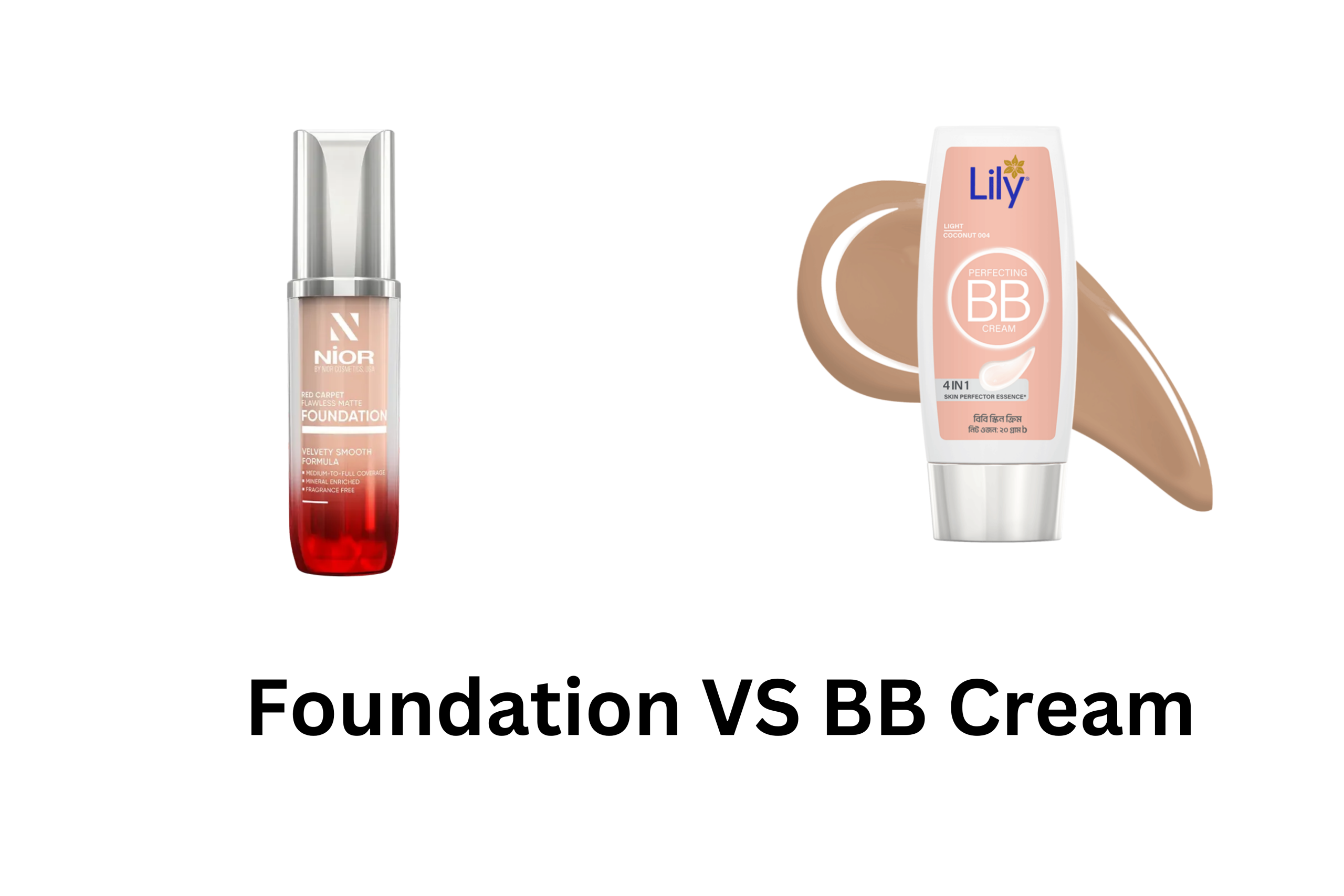
BB Creams are not interchangeable with foundation – both are different products. Choosing the wrong product can leave your skin looking dull, uneven-toned, and without any coverage.
Foundations deliver 15%-30% pigment concentration, especially designed for coverage and color correction. It’s the go-to product when edium to full coverage is needed for 8 to 12 hours. BB creams contain 5%-15% pigment concentrations, along with skin care actives, SPF, and moisturizers, all in a single formula.
Foundations can be chosen for applications on events, professional photography, or skin concerns that need to be concealed. BB Creams can be chosen for daily applications, minimal makeup, or no makeup looks, and makeup with skin care benefits throughout the year. According to a 2023 research published in the Journal of Cosmetic Dermatology, BB Creams maintain hydration 40% better than traditional foundations over 8 hours.
There are no “good” nor “bad” options when choosing between them. These two products serve different purposes. Foundations excels at coverage, whereas BB cream prioritizes low or mid coverage and skin health. Sometimes they both are needed and found in the pouch.
What is a foundation?
Foundation is the coverage specialist when it comes to even skin tone and hiding imperfections like acne, dark spots, redness, and pigmentation. The foundations have pigment concentrations of 15%-30%. This is not marketing fluff; it’s the actual percentage of color particles in the formula. The higher the percentage, the better the coverage. A higher percentage delivers more opacity and better coverage on imperfections.
Types of foundation:
- Liquid Foundation: The most popular form of foundation found in the market. The formula of liquid foundation is versatile, buildable, and suitable for all skin types.
- Cream Foundation: Thick consistency and very hydrating, suitable for dry or mature skin.
- Powder Foundation: Lightweight and oil-absorbing formula. Perfect formula for skin touch-ups.
- Stick Foundation: Compact, portable, and great formula for coverage. Perfect for travel and quick glam.
Foundations offer customizable coverage, ranging from low to high, to suit various product needs and specifications.
Foundations always require a product that works as a supporting formula for optimal results. Such as primers for smooth application, concealers for covering pigmentations or uneven tones, color correctors for covering dark areas, powder, and setting spray for longevity.
What is a BB Cream?
BB Creams are multi-tasking hybrids! BB Cream stands for Blemish Balm or Beauty Balm. This product originated in Germany and is now one of the most popular Asian Beauty Trends. German Dermatologists developed this formula as a recovery product for post-laser treatment. Later, Korean Brands transformed this formula for everyday cosmetics.
The formula of BB Cream combines light pigmentation with skin care ingredients, such as hyaluronic acid for hydration, niacinamide to reduce inflammation, and chemical sunscreen for UV protection.
BB Creams are combinations of:
- Moisturizers
- SPF
- Light Pigments
- Antioxidants
- Anti-aging ingredients
BB Creams act as an all-in-one formula – moisturizer, sunscreen, primer, and very light foundation.
Key Differences Between the BBC Cream and Foundation
| Feature | Foundation | BB Cream |
| Pigment Concentration | 15-30% | 5-15% |
| Primary Purpose | Coverage and color correction | Skincare with light coverage |
| SPF | Optional (30% of products) | Standard (95% include SPF 15-30) |
| Application Time | 4-6 minutes with tools | 1-2 minutes with fingers |
| Wear Duration | 8-16 hours | 6-10 hours |
| Buildable Coverage | Highly customizable | Limited, becomes heavy and over-application may look cakey |
| Skin Benefits | Minimal to none | Active ingredients improve skin |
| Shade Range | 25-60 shades typical | 4-12 shades typical |
Key Differences Between the BBC Cream and Foundation
The actual coverage performance comparison tested by the International Journal of Cosmetic Science (2024):
| Coverage Level | Pigment % | What It Conceals | Typical Products |
| Sheer | 5-10% | Minimal tone evening | Tinted moisturizers, light BB creams |
| Light | 11-18% | Minor redness, slight unevenness | Most BB creams and lightweight foundations |
| Medium | 19-24% | Most blemishes, moderate discoloration | Standard foundations |
| Full | 25-30% | Significant scarring, melasma, tattoos | Long-wear foundations, stage makeup |
Foundation averages an opacity of 78% in wear tests. BB Cream averages an opacity of 43% under identical conditions. It’s nearly double the coverage opacity, which explains why they look and perform so differently on skin.
When to use foundation?
As foundations provide medium to high coverage create flawless appearance, high definition cameras and professional lighting can only reveal the details of the skin.
Occasions demand foundation:
- Weddings (participating or attending)
- Professional headshots or portraits
- Video conferences with important clients
- Award ceremonies or galas
- Job interviews in corporate settings
- Any event lasting 8+ hours
Celebrity makeup artist Mario Dedivanovic states, “For red carpets and photoshoots, foundation is non-negotiable. The camera sees everything BB cream leaves visible.”
Significant Skin Concerns
Experiencing skin conditions that affect your confidence, foundation provides the coverage BB creams cannot deliver:
- Active acne and inflamed breakouts
- Rosacea with persistent redness
- Post-inflammatory hyperpigmentation
- Melasma or significant sun damage
- Dark circles (paired with concealer)
- Scarring from previous skin issues
Dermatologist Dr. Whitney Bowe notes: “If a skin concern impacts your daily confidence, foundation offers psychological benefits beyond cosmetics. Just ensure your formula doesn’t contain pore-clogging ingredients that worsen the underlying condition.”
Professional Work Environments
Industries with higher grooming standards benefit from the foundation’s polished appearance:
- Corporate leadership roles
- Client-facing positions (consulting, sales)
- Hospitality and service sectors
- Media and entertainment
- Legal and financial services
The consistent 8-12 hour wear time that doesn’t require midday touch-ups that interrupt the workflow.
Application Techniques
How to Apply Foundation Properly
Step 1: Prepare Your Skin
- Cleanse and moisturize the application area
- Wait 2-3 minutes for products to absorb
- Apply primer suited to skin type (mattifying for oily, hydrating for dry)
Step 2: Choose Your Application Method
Damp Beauty Sponge (Best for Natural Finish):
- Use a wet sponge and squeeze out excess water
- Dot foundation on five points: forehead, cheeks, nose, chin
- Bounce the sponge across the skin in patting motions
- Do not drag or swipe—creates streaks
- Use the pointed end for precise areas
Foundation Brush (Best for Speed):
- Use a dense, flat-top, or stippling brush
- Buff in circular motions from the center outward
- Blend edges at the hairline and jawline
Fingers (Best for Dry Skin):
- Warm product between fingertips
- Press and pat onto skin
- Body heat aids blending and absorption
Step 3: Build Coverage Strategically
Start with minimal product—about half a pump for your entire face. Build coverage only where needed:
- Full coverage: Center of face (nose, cheeks, forehead)
- Medium coverage: Outer cheeks, chin
- Light coverage: Perimeter areas
Step 4: Set for Longevity
- Powder T-zone only (forehead, nose, chin)
- Use setting spray in X and T pattern
- Let dry 60 seconds before touching face
How to Apply BB Cream
BB cream application is intentionally straightforward:
- Prep minimally – Cleanse face, apply toner, serum, moisturizer and sunscreen.
- Dispense product – Use pea-sized amount on the back of the hand
- Dot on five points – Forehead, both cheeks, nose, chin
- Blend with fingers – Spread and pat into skin using fingertips
- Set if needed – Skip for dewy finish; light powder on T-zone for oily skin
Why fingers work best: Body heat warms the BB cream, activating adaptive pigments and improving blend quality. Professional tools are not necessary for BB Cream application.
Skin Type Recommendations
For Oily Skin
| Foundation: | BB cream: |
| Choose oil-free, matte finish formulas | Select “oil-control” or “matte” BB creams (limited options) |
| Use a mattifying primer underneath | Apply sparingly and set immediately |
| Set with oil-absorbing powder | Expect 4-6 hour wear before breakthrough shine |
| Expect 8-12 hour wear before shine appears | Use blotting papers for touch-ups |
Foundation performs better for oily skin throughout extended wear periods.
For Dry Skin
| Foundation: | BB cream: |
| Choose hydrating, dewy formulas with glycerin or hyaluronic acid | Excellent natural match for dry skin |
| Mix 1 drop facial oil with foundation for extra moisture | Built-in moisturizers provide continuous hydration |
| Use damp sponge for application | Dewy finish enhances dry skin appearance |
| Skip powder or use only on T-zone | Can reapply throughout day for moisture boost |
BB cream often outperforms foundation for dry skin due to continuous hydration benefits.
For Combination Skin
Use “zoning” strategy:
| Foundation: | BB cream: |
| Mattifying primer on T-zone | Excellent natural match for dry skin |
| Hydrating primer on cheeks | Built-in moisturizers provide continuous hydration |
| Satin-finish foundation across the entire face | A dewy finish enhances dry skin’s appearance |
| Use a setting powder on oily areas only | Can be reapplied for a moisture boost. |
Both products work well—choose based on coverage needs rather than skin type compatibility.
For Sensitive Skin
| Foundation & BB Cream: Look for both products | Foundation & BB Cream: Avoid |
| Fragrance-free formulations | Alcohol in ingredients |
| Mineral-based options (zinc oxide, titanium dioxide) | Synthetic fragrances |
| Hypoallergenic labels | Esssential oils |
| Short ingredient lists | Chemical sunscreen if reactive |
Patch-test any new product on your jawline for 24 hours before full-face application.
Cautions:
Mistake 1: Wrong Shade Selection
The problem: Testing foundation indoors under artificial lighting gives inaccurate color matching. What looks perfect in-store appears orange or gray in daylight.
The fix: Always test shades on the jawline (not your hand or wrist—different undertones). View in natural daylight before purchasing. Buy samples from online pages to test in multiple lighting conditions. Check color after 2 hours—oxidation may darken some formulas.
Mistake 2: Using Expired Products
Shelf life reality:
- Foundation (opened): 6-12 months for liquid, 18 months for powder
- BB cream (opened): 6-8 months (active ingredients degrade faster)
Warning signs of expiration:
- Color changes or darkening
- Separation that doesn’t remix when shaken
- Strange or sour smell
- Texture becomes thick or watery
London Metropolitan University research (2023) found expired makeup contains 70-90% higher bacterial levels than fresh products, significantly increasing infection risk.
Simple solution: Mark the opening date on the product with a permanent marker. Discard when expired regardless of remaining product.
Mistake 3: Skipping Primer with Foundation
Why it matters: Foundation without primer wears 30-40% less time, settles into pores within 3-4 hours, and transfers more easily onto clothing and phones.
Match primer to concern:
- Large pores: Use silicone-based pore-filling primer
- Dryness: Use a hydrating primer with hyaluronic acid
- Oiliness: Use a mattifying primer with oil-absorbing ingredients
- Redness: Use color-correcting green primer
BB cream exception: Primer is typically unnecessary since BB cream includes priming properties in its formulation.
Mistake 4: Over-Application
How much is right:
- Foundation: ½ to 1 pump (liquid) or pea-sized amount (cream) for entire face
- BB cream: Pea-sized amount initially, build only if genuinely needed
Visual check: The application must make the skin look enhanced, not painted or caked. If the application can be noticed across a room, the product application was too much.
Mistake 5: Not Blending to Neck
The floating face problem: Applying foundation only on the face creates an obvious color disconnect at the jawline.
Professional practice: Blend foundation down your neck and onto your chest if visible. Your face, neck, and chest should appear as one cohesive color when application is complete.
<div id=”faqs”></div>
Frequently Asked Questions
Can I wear both foundation and BB cream together?
Layering both products isn’t necessary. If you want to use BB Cream, then use a concealer that matches your skin tone, and apply strategically on specific areas that need to be concealed.
A small amount of foundation and BB Cream can be mixed, and the coverage level can be customized so it doesn’t look heavy.
Does BB cream actually replace moisturizer and sunscreen?
It depends on the skin type. If dry, moisturizer is necessary. Even in oily skin, try to apply a gel-based moisturizer. BB Cream doesn’t replace sunscreen. It’s always necessary to apply a generous amount of SPF 30, and it’s recommended by dermatologists.
How do I know which coverage level I actually need?
Examine your bare skin in natural daylight and honestly assess what you see. Minimal discoloration or just a few small blemishes means light coverage (BB cream) is sufficient. Noticeable redness, mild acne scarring, or uneven tone across larger areas indicates you need medium coverage (standard foundation). Significant hyperpigmentation, active acne, melasma, or rosacea that impacts your confidence requires full coverage foundation. Remember that personal preference matters too—some people prefer visible skin texture while others want smoother uniformity regardless of their actual skin condition.
Is BB cream suitable for men?
Absolutely. BB cream and foundation are unisex products—skin coverage needs aren’t determined by gender. Many men choose BB cream for daily use because it provides subtle skin evening without obvious makeup appearance, applies quickly with fingers, and delivers natural finish. Foundation works for men needing higher coverage for acne, scarring, or professional situations. Some brands market specifically to men (Stryx, Tom Ford for Men, Shiseido Men), but these products are functionally identical to standard formulations. Select based on your coverage needs and skin type, not marketing demographics.
Should I use primer under BB cream?
Generally, no. BB cream formulations include priming properties—silicones and film-formers that help product adhere to skin and provide smooth application. Adding primer underneath often creates product pilling (balling up) or excessive heaviness that defeats BB cream’s lightweight advantage. The exception is color-correcting primers for specific concerns: green primer neutralizes redness, purple primer counteracts sallowness. If you have extremely oily skin or very large pores, minimal mattifying primer on your T-zone only might help, but most users find BB cream works best applied directly to cleansed, moisturized skin.
Which lasts longer throughout the day?
Foundation generally provides superior longevity. Quality long-wear foundations maintain 8-16 hours of coverage without significant breakdown, fading, or oxidation. Standard foundations last 8-10 hours before needing touch-ups. BB cream typically lasts 6-10 hours, with performance declining faster in hot or humid conditions. Professional wear-testing shows foundation maintains approximately 82% of initial coverage after 8 hours, while BB cream maintains about 61% coverage over the same period. However, BB cream’s lighter texture makes many people more tolerant of its shorter wear time, while foundation’s heavier feel makes extended wear time essential for comfort.
Can I use these products if I have acne?
Yes, but product selection is critical. Choose non-comedogenic formulas specifically designed not to clog pores. For active acne, dermatologists often recommend BB creams containing acne-treating ingredients like salicylic acid (2%), tea tree oil, or niacinamide that actively improve skin during wear. Avoid heavy, oil-based foundations that may worsen breakouts. Research in the Journal of the American Academy of Dermatology (2023) confirmed that properly formulated non-comedogenic foundations don’t cause or worsen acne, but products containing coconut oil, lanolin, or certain heavy silicones can trigger breakouts in acne-prone individuals. Always patch-test new products for 48 hours before full-face application and check ingredients against comedogenicity ratings.


